
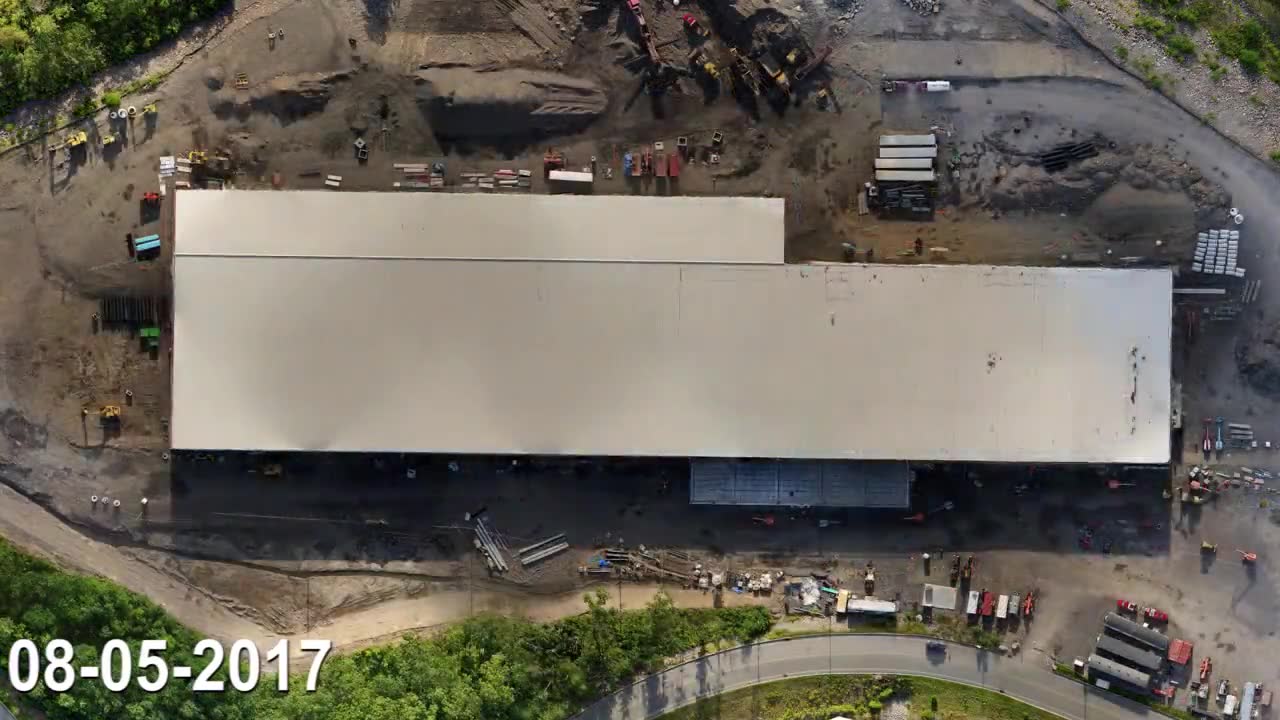
Short answer: a fixed timelapse camera is best when you want one view recorded all day, every day, plus a live feed your team and owner can watch. Drone progress flights are best when you need the whole site, from above, on a schedule, with maps you can measure from. On larger builds the two work best together.
Here is how to decide, based on what you need to show, who needs to see it and what is on site. Or skip ahead and answer five quick questions for a recommendation.
Side by side
| Fixed timelapse camera | Drone progress flights | Both | |
|---|---|---|---|
| What it sees | One view, from one position, for the whole job | The whole site from above, plus oblique angles | One view all the time, plus the whole site on flight days |
| How often | Continuously, day and night | On a schedule you set, such as weekly or every two weeks | Continuous recording plus scheduled flights |
| Live view | Yes: a live feed, public or password-protected | No: you get files after each flight | Yes, from the camera |
| What you get | Live feed, recorded footage, a finished timelapse film at the end | Photos, video, overhead maps and a dated aerial progression at closeout | A ground-level timelapse film and an aerial timelapse of the whole site |
| Measurable | No | Yes, when flights include overhead mapping | Yes, from the mapping flights |
| Weather | Records through rain, snow and wind | Flights wait for workable weather | The camera keeps recording while flights wait out the weather |
| What you provide | Power and an internet connection on site | Site access and a safety contact | Power and internet for the camera, plus site access |
Choose a fixed timelapse camera when…
- The owner wants to watch. A live feed lets owners, lenders, the design team and the public check on the job from a browser or phone without a site visit or a phone call to the super.
- You want the finished film. Months of work cut into a minute or two is what gets played at the ribbon cutting and posted on the owner’s website.
- The key moments don’t keep a schedule. Night pours, crane picks and weather delays all get recorded because the camera is always running.
- The job runs long. A camera installed once covers the whole build.
What it takes: we supply, install and run the cameras, network gear, an on-site recorder and the streaming. The contractor or owner provides power and an internet connection. The cameras don’t need to sit next to the connection, because a wireless link carries the signal to wherever the internet is, such as the job trailer. If the connection drops, the recorder keeps recording, so the timelapse footage isn’t lost.
Choose drone progress flights when…
- The site is big or spread out. One camera can’t see a whole campus, a long road job or a plant with several buildings. A drone can.
- You need records for progress reports. Dated photos and video from the same positions every visit drop straight into owner reports and pay application backup.
- You need to measure. Overhead mapping flights produce maps you can measure distances and areas from and compare visit to visit.
- There is no power or internet yet. Early sitework often has neither. A drone needs nothing on site.
On the Cardinal LG facility we flew bi-weekly for the general contractor, L.R. Costanzo, from the same overhead and oblique positions each visit. Those flights fed the contractor’s progress reports, and at the end the dated images became the aerial timelapse above.
Or do both
A fixed camera gives you one view all the time. Drone flights give you every view on a schedule. On the Geisinger Cancer Center in Dickson City we ran both: a live stream and fixed-camera timelapse, plus drone progress flights and mapping. The project ended with a ground-level timelapse film and an aerial timelapse of the whole site, from one team.
Five questions to settle it
Answer them below and we’ll suggest a setup. The quote button at the end fills in the services for you.
[aa_setup_picker]
Common questions
Can a drone replace a timelapse camera?
Not for a live view or a continuous record. Scheduled flights can be cut into an aerial timelapse, but they show the site on flight days only, not everything in between.
How often should a construction site be flown?
It depends on how fast the site changes and how often you report. Weekly or every two weeks is common during the busiest phases, and some projects fly less often once the building is enclosed.
Can we add flights to a camera package later?
Yes. A project can start with one and add the other as the job grows, for example flights during sitework and cameras once power and internet are in.
Can the live feed be private?
Yes. The feed can be public, for example embedded on the project website, or password-protected so only your team and client can watch.
Learn more about timelapse and live cameras, construction progress flights and mapping, or see the cameras in action on the Harrison Avenue Bridge implosion. Not sure which fits your job? Send us the project basics and we will recommend a setup.